


August 25, 2026
Canada's Counter-Tariffs Start September 8: 15%, 25% and 50%


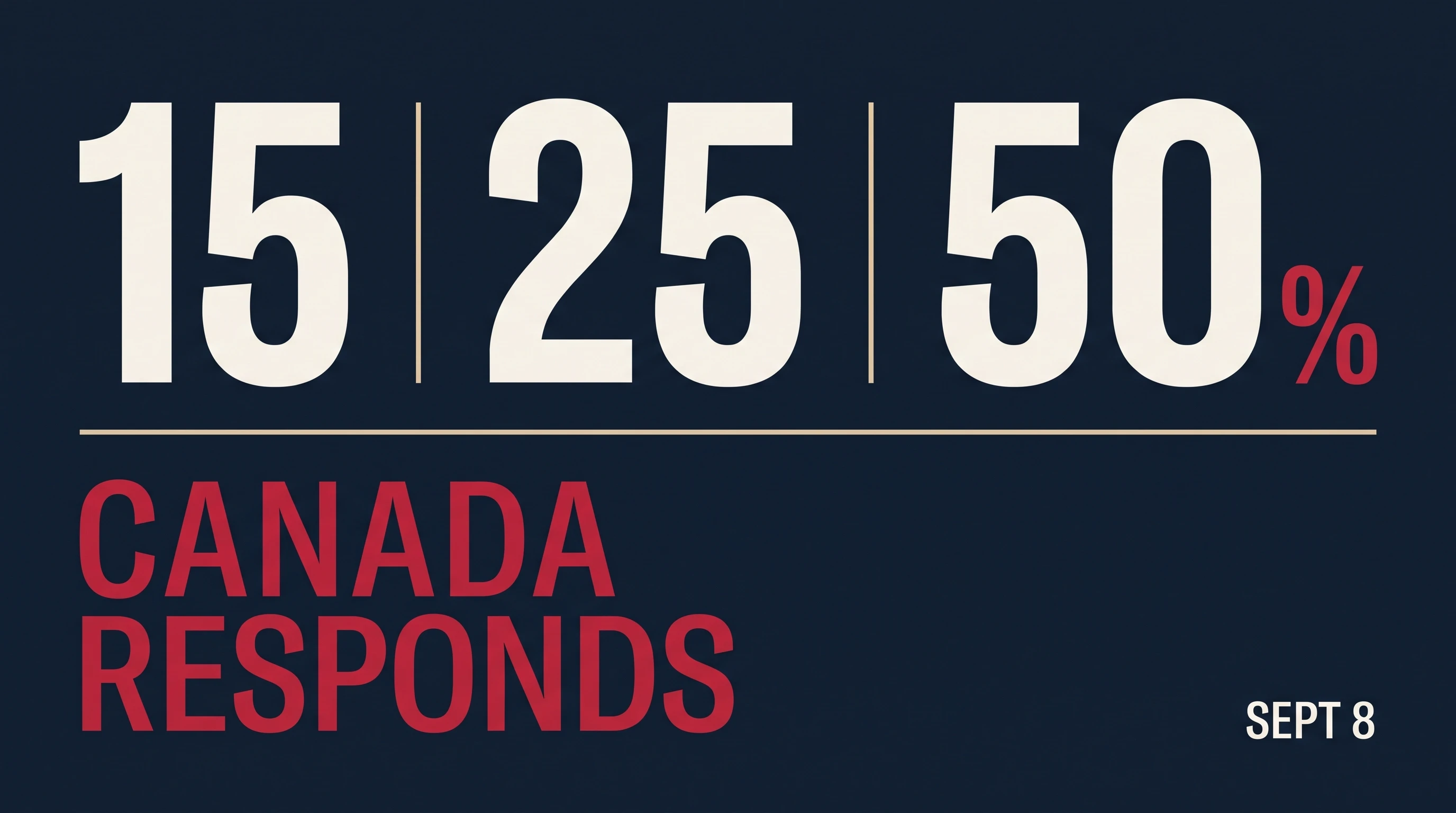
Canada will apply surtaxes of 15%, 25% and 50% to $27.6 billion in U.S.-origin goods from 12:01 a.m. on September 8, 2026, with each product's rate matched to the U.S. rate on the equivalent good. Goods in transit on that date are exempt. Two weeks is enough to screen a purchase catalogue and reprice.
What was announced
Prime Minister Carney committed to matching the U.S. Section 338 action dollar for dollar on August 22. Finance Minister François-Philippe Champagne published the tariff-item-level list on August 25.
Canada matched by value, not by product. It set the total at the same $27.6 billion but drew from goods targeted by both U.S. Section 338 and Section 232 measures, which makes its pool wider than the U.S. action alone.
Where the two lists diverge
A category the U.S. carved out of Section 338 can still appear on Canada's list, which is the detail most likely to catch a two-way shipper.
Steel, aluminum and copper are the clearest case. They sit in the U.S. exclusion heading 9903.03.15, so they escape the 50% southbound. Steel and aluminum lead Canada's list northbound. Screening one direction gives you no information about the other.
The rest of Canada's list concentrates on dairy, appliances, agricultural equipment, pulp and paper, plastics and electronics. It is published at the tariff-item level, and the same HS heading can carry different rates depending on the item.
The origin test is not CUSMA
The surtax applies only to goods eligible to be marked as U.S. goods under the Determination of Country of Origin for the Purpose of Marking Goods (CUSMA Countries) Regulations.
That is the marking test, not the preferential rules of origin. A shipment can be CUSMA-originating and still be U.S.-origin for marking purposes, or the reverse, so a CUSMA certificate does not answer the question. CUSMA preference does not exempt goods from the surtax.
Goods in transit
U.S. goods in transit to Canada on the day the countermeasures take effect are not subject to the surtax. The U.S. action carried no equivalent provision.
For inbound orders arriving close to September 8, retain the documents that establish departure timing before you need them.
Financial security and pending guidance
CBSA had not published its Customs Notices as of August 25. Reporting mechanics and the evidentiary standard for the in-transit exemption will come through that channel.
Importers using Release Prior to Payment should review their CARM financial security ahead of the date. New surtaxes raise duty and tax liability, and security posted against a pre-surtax liability may no longer be adequate. Our CARM bond page covers how the requirement works and what changing it involves.
Screen both directions
- HS code lookup — confirm the classification on goods you buy from U.S. suppliers, then check those tariff items against the Finance Canada list and the Schedule to Canada's Customs Tariff.
- Tariff Impact Checker — screen your southbound HTS codes against active Section 301, 232, and 338 measures so you see both sides of the exposure in one pass.
- HTS code lookup — confirm any code the checker flags before you act on it.
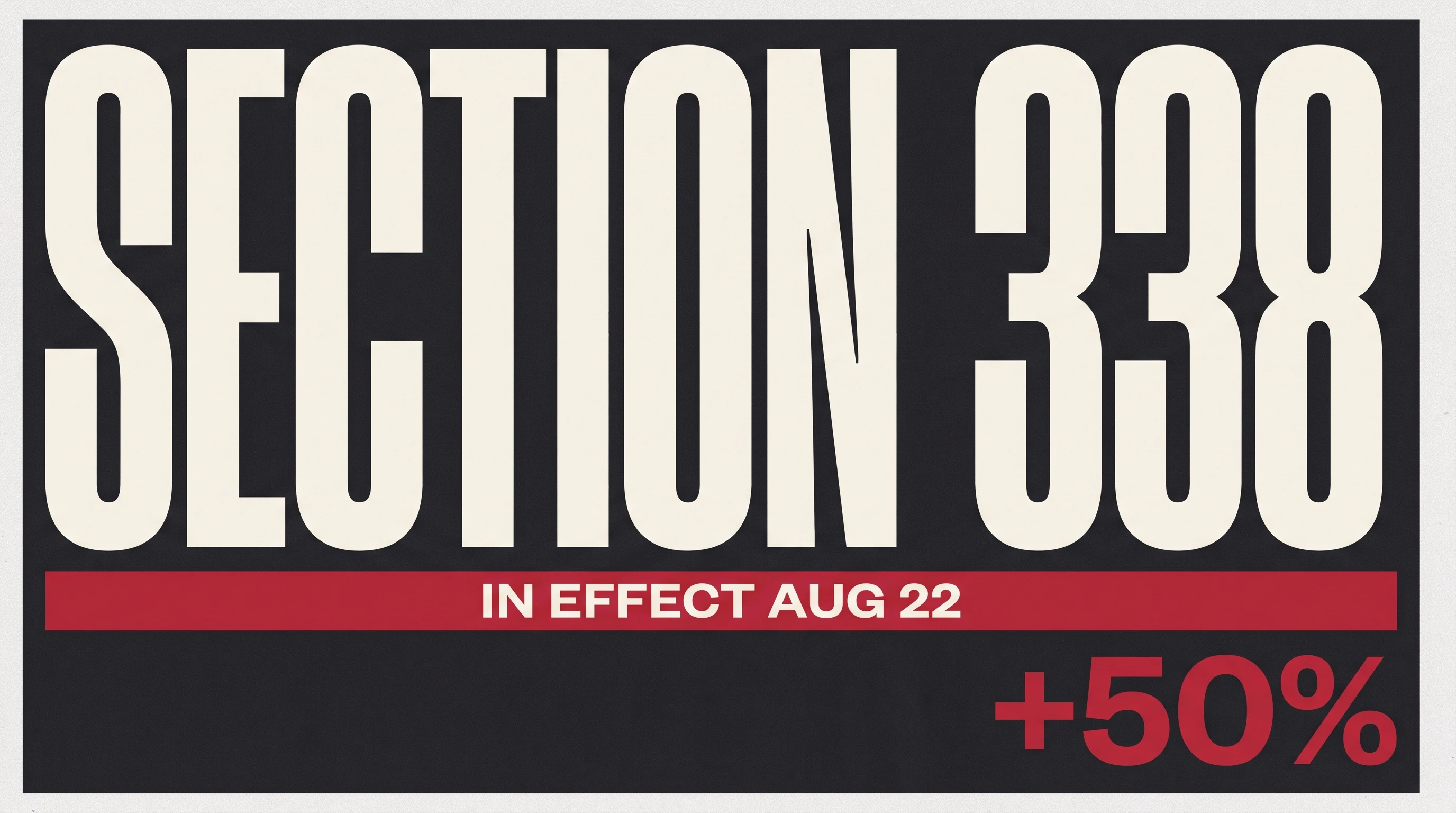
For the U.S. side, see the 50% Section 338 duty now in effect.
We will update this page as CBSA publishes its Customs Notices.
Helping you navigate customs clearance


¿Tienes curiosidad por saber más sobre Zipments?
Si eres un camionero o una empresa interesada en nuestra revolucionaria plataforma, ¡no dudes en contactarnos!





Mejorando los procesos aduaneros, un conjunto de herramientas a medida para corredores, importadores y camioneros.
canadá

Estados Unidos
Recursos
jurídico
