


August 22, 2026
Section 338: 50% U.S. Duty on Canadian Goods Is Live


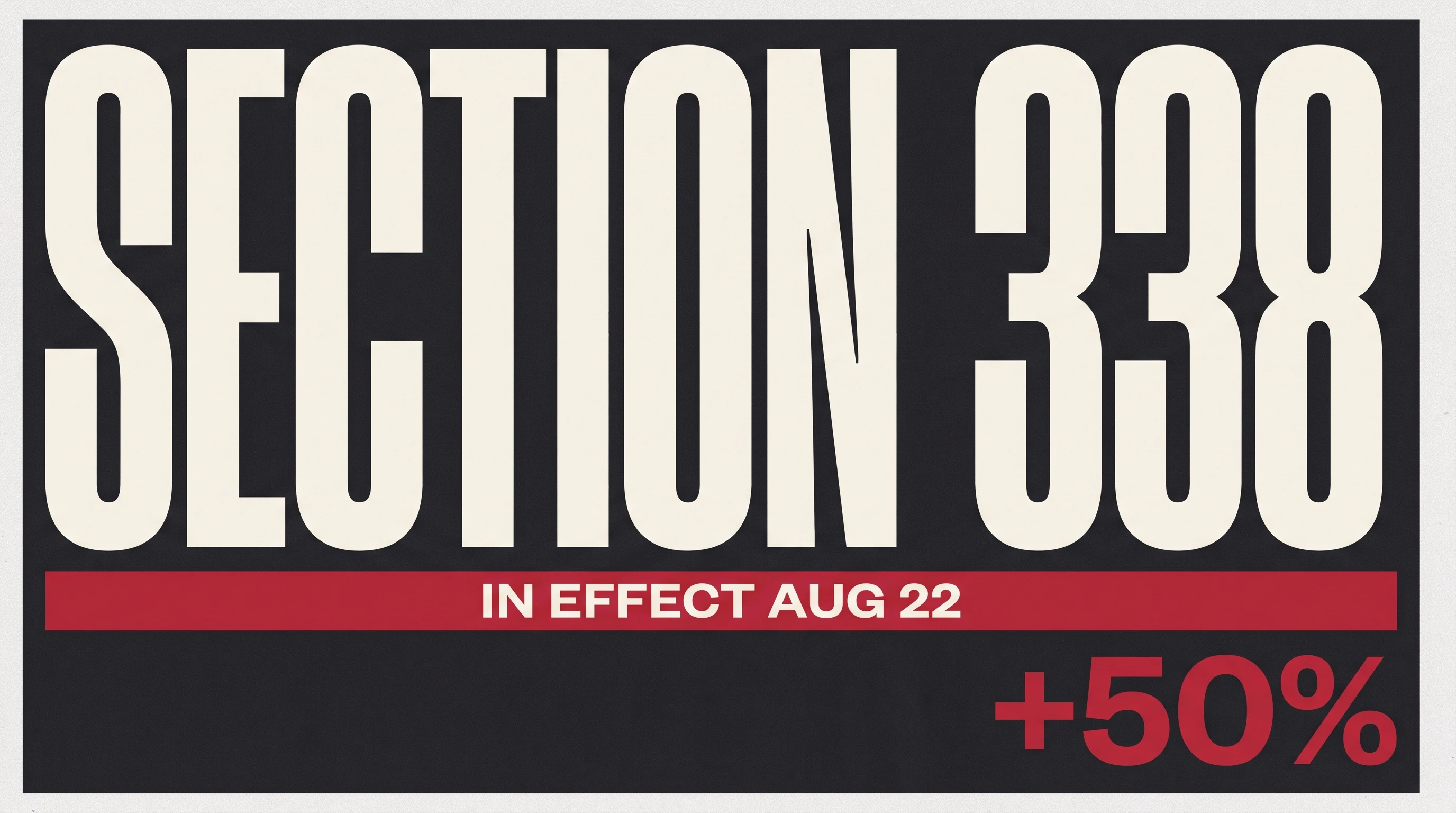
An additional 50% U.S. duty on specified Canada-origin goods took effect at 12:01 a.m. Eastern on August 22, 2026. CUSMA does not exempt it, coverage is defined by HTS code, and there is no expiry date. For procurement and logistics teams, this is a classification problem before it is a cost problem.
The mechanics
The duty applies to covered products of Canada entered for consumption, or withdrawn from warehouse for consumption, on or after 12:01 a.m. Eastern on August 22, 2026. Entry date governs. No in-transit relief was granted.
Section 338 of the Tariff Act of 1930 had never been used to impose tariffs before this action. Unlike the Section 232 and 301 measures most trade teams have processes for, it required no investigation and sets no time limit.
Three proclamations signed July 20, 2026, cover alcoholic beverages, dairy, and motor vehicles, published at 91 FR 46639, 91 FR 46653, and 91 FR 46663. A three-day suspension moved the start from August 19 to August 22 while negotiations ran. They ended without agreement on August 21.
Coverage
CBP published the affected classifications in CSMS #69606660 on August 21, with an attachment mapping every Chapter 1-97 code to its Chapter 99 heading. Headings 9903.03.12, 9903.03.13 and 9903.03.14 carry the 50% rate.
Coverage extends well past the three named sectors. Reported items include wine, cement, plywood, electrical equipment, hockey sticks and medical disposables. The annexes are code lists, so a sector description is not a usable screen for a catalogue of any size
The 50% stacks. Covered goods remain subject to MFN duty, Section 232 where it applies, antidumping and countervailing duties, and all other applicable fees.
Exclusions
9903.03.15, at a 0% additional rate, covers aluminum, steel and copper articles and derivative aluminum or steel articles; passenger vehicles and light trucks and their parts; medium- and heavy-duty vehicles and their parts; wood products; semiconductor articles; and patented pharmaceutical articles.
9903.03.16, also 0%, covers civil aircraft other than military and unmanned aircraft, their engines, parts, components and subassemblies, and ground flight simulators and their parts.
Exclusion from Section 338 is not an exclusion from Section 232, and the 0% heading still has to appear on the entry.
No CUSMA exemption
CUSMA-qualifying goods pay the 50%. Origin under the agreement does not exempt them.
Qualification still removes the Most Favoured Nation rate in Column 1 of the U.S. tariff schedule. Non-qualifying goods pay MFN plus the 50% plus anything else applicable, so the value of a valid origin claim has risen in absolute terms even though it no longer prevents the duty.
Screen the catalogue, not the shipment
Because exposure is at the code level, the useful unit of work is your entire classification list rather than the next order.
- Tariff Impact Checker — built for this action. Submit HTS codes with Canada as the origin, and it returns which are subject to an active Section 301, 232, or 338 measure, the rule behind each flag, the effective date, and the rate change, where published. Unmatched codes come back listed as checked, which is what you need when reconciling a catalogue.
- HTS code lookup — confirm the classification on any flagged code before acting on it. Codes assigned years ago are the usual source of error.
- HS code lookup — for goods moving into Canada that face a separate measure starting September 8.
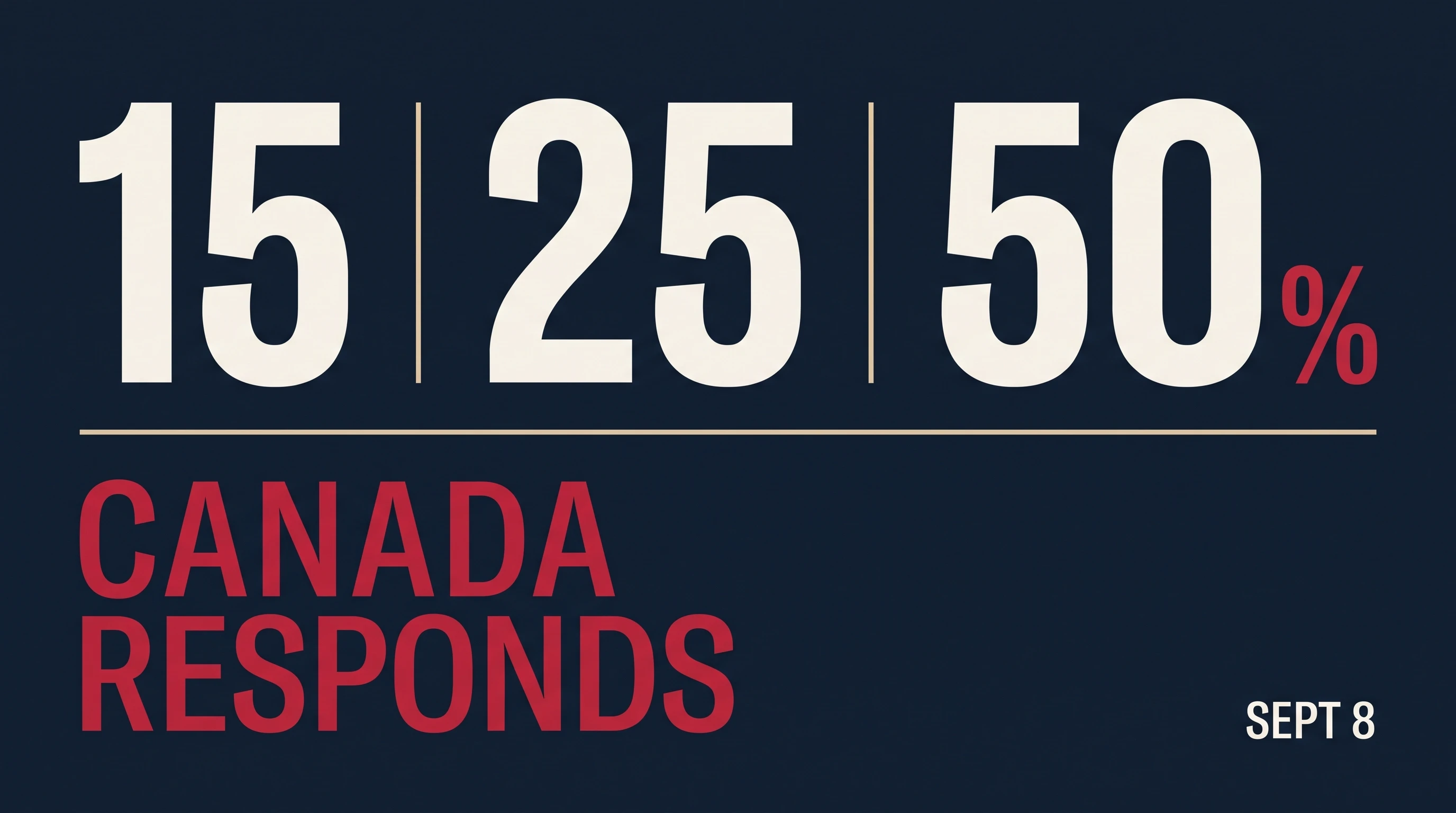
Canada published its counter-tariffs on August 25. See Canada's counter-tariffs from September 8 for the northbound picture.
We will update this page if CBP issues further guidance.
Helping you navigate customs clearance



¿Tienes curiosidad por saber más sobre Zipments?
Si eres un camionero o una empresa interesada en nuestra revolucionaria plataforma, ¡no dudes en contactarnos!





Mejorando los procesos aduaneros, un conjunto de herramientas a medida para corredores, importadores y camioneros.
canadá

Estados Unidos
Recursos
jurídico
